
When Does a Restaurant Become a Hospitality Brand?

How a restaurant's world learns to travel beyond the dining room.
Not every successful restaurant should become a hotel, a club, a product line or a global collection.
A full dining room proves that people want the table. It says far less about whether they would follow the restaurant anywhere else, and that second question sits underneath every conversation about restaurant brand expansion.
This fall, two New York stories land at opposite ends of it. The Wolseley, London's grand café on Piccadilly, is preparing its first hotel and a private members' club in Midtown Manhattan. Daniel Boulud, meanwhile, has folded three neighboring restaurants across from Lincoln Center into a single flagship.
One brand is expanding its universe. The other is simplifying its portfolio.
Both decisions begin with the same strategic question: what deserves to become bigger, and what becomes stronger by becoming clearer?
When a restaurant is ready to become a hospitality brand
The real question is whether the restaurant has built a world that can travel beyond the dining room.
A restaurant becomes a hospitality brand when guests want more of its world than one meal can hold.
A restaurant may be ready for that step when it has:
- A recognizable worldview that runs deeper than a popular menu
- Rituals and service codes guests want to experience again
- An audience asking for more ways to take part
- A point of view strong enough to shape rooms, programming, products and partnerships
- Enough clarity to expand without losing what made it desirable
Putting the same logo on more things is the easy part. Growth starts with knowing which emotional and behavioral qualities guests are actually loyal to (the hour they linger, the greeting at the door, the dish they bring friends back for), then finding new ways for them to enter that world.
Sometimes that means a hotel or a club. Sometimes it means a market, a bakery, a bar or a more accessible sibling. And sometimes the smartest growth strategy is consolidation.
Five recent moves, from Edinburgh to Las Vegas, show how each version works.
Five restaurants growing into hospitality brands
The Wolseley, London to New York: the grand café becomes a house
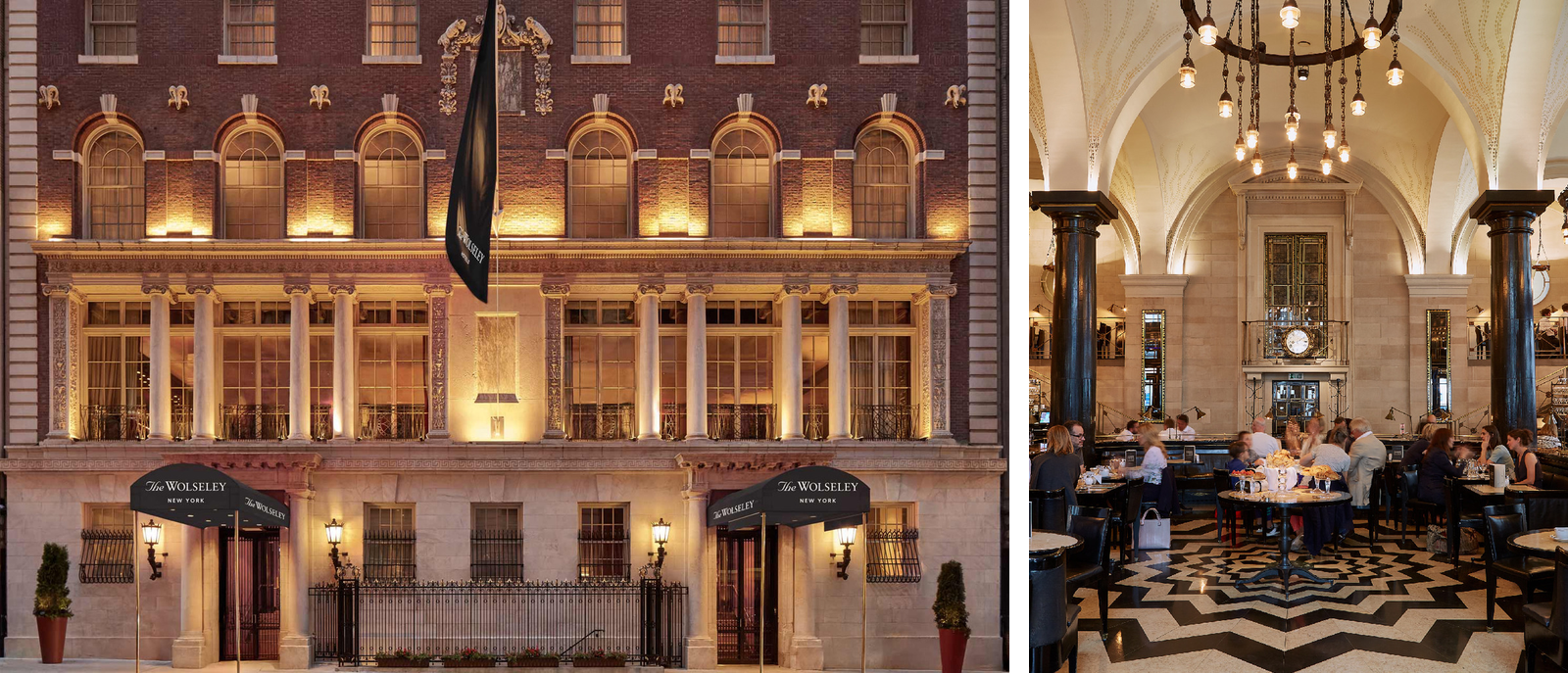
The Wolseley's real product has always been the room itself. Since 2003, its marble-floored café on Piccadilly has kept an all-day rhythm of breakfast, lunch, afternoon tea and dinner, where regulars and first-timers get the same care.
Minor Hotels, which owns the brand, is now giving that room an address you can stay in. The Wolseley Hotel New York opens in 2027 at 130 West 44th Street, the 1905 Lambs Club clubhouse designed by McKim, Mead & White. The restaurant (the brand's first in the US) sits at its center, with a cellar-level bar, wellness facilities and The Wolseley Members Club across several floors: lounges, dining rooms, private salons and terraces around the restored Stanford White Room.
The choice of building does much of the brand work. A grand café built on conversation moves into a clubhouse built for exactly that, so the new format reads as an inheritance. The brand tested its reach carefully first, with a Café Wolseley pop-up in Bangkok in 2023.
Humm, New York: a three-star world at a gentler pace
For two decades, Eleven Madison Park has been one of the most precise dining rooms in the world. Its new sibling in the West Village is built for an ordinary weeknight.
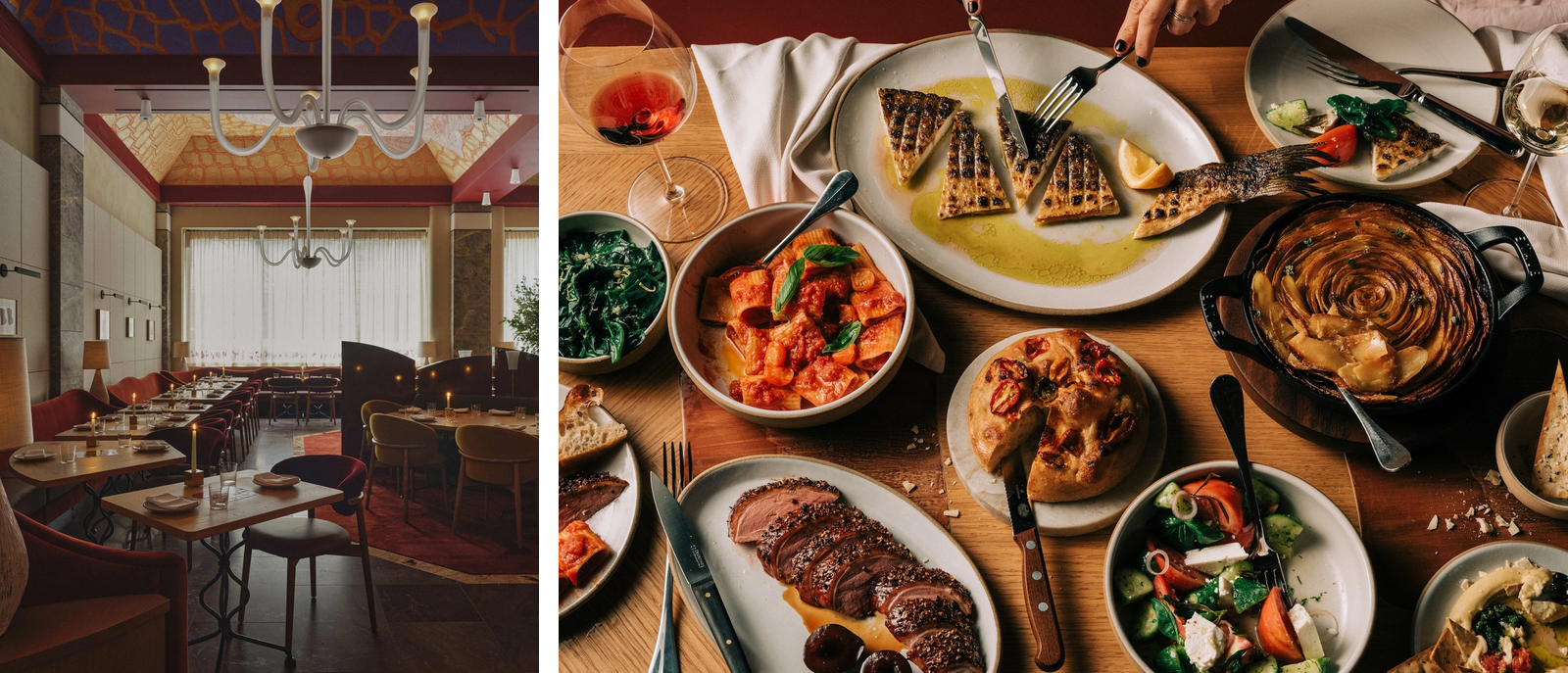
Humm opened on 10 October at 435 Hudson Street. It is the first restaurant Daniel Humm has opened entirely on his own, and the first to carry his name. The menu is à la carte and simpler: vegetables from Magic Farms (which also supplies Eleven Madison Park), a wood-fired oven behind the open kitchen, a martini cart rolling between tables, and a roast chicken for two inspired by his mother's cooking.
The family resemblance is deliberate. Pierre Yovanovitch designed the rooms, and Francesco Clemente, whose murals already line Clemente Bar at Eleven Madison Park, hand-painted the entire ceiling. Works by Louise Bourgeois, Roni Horn and Rashid Johnson sit in the corners.
“We want to become an institution.”
Daniel Humm, to Cultured
A more accessible sibling works when guests recognize the family at once: the same farm, the same artists, the same care, at a gentler pace.
Cantina Contramar, Mexico City to Las Vegas: the spirit travels, the format changes
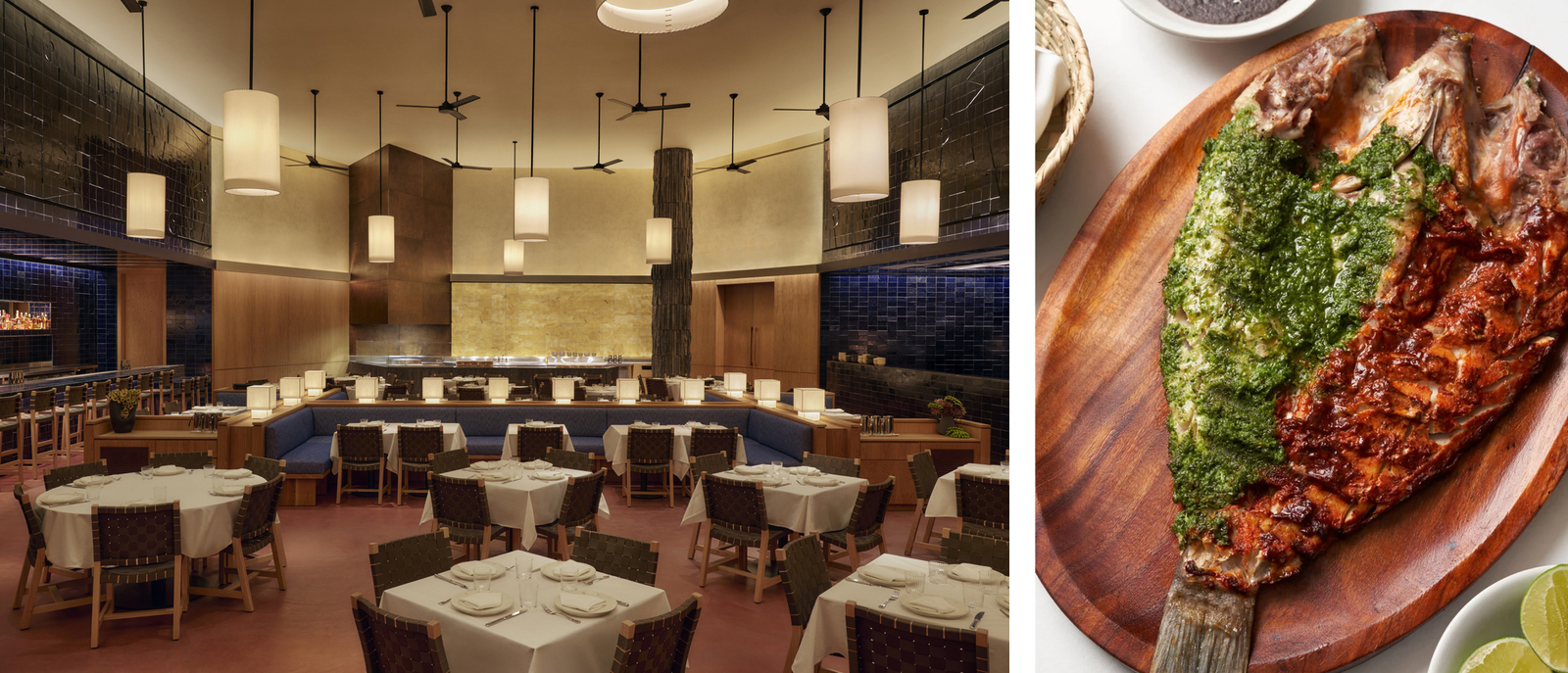
For nearly three decades, Contramar has been a reason to fly to Mexico City: long lunches in Roma Norte, tuna tostadas, and pescado a la talla painted red on one side and green on the other. When Gabriela Cámara finally brought it to the US this spring, she chose to translate it.
“I didn't want to put a Contramar here.”
Gabriela Cámara, to the Las Vegas Sun
Cantina Contramar opened in March at Fontainebleau Las Vegas as a cantina, the word Cámara felt described Contramar best: informal, generous, built for sharing. Architect Frida Escobedo, in her first US restaurant, gave it amber onyx and soft light. Tequila Casa Dragones, led by maestra tequilera Bertha González Nieves, anchors the bar. The classics travel, with the fish sourced as locally as Cámara can, alongside dishes written for Las Vegas.
What crossed the border was a way of hosting. The room and the menu were free to change around it.
Lyla, Edinburgh: the tasting menu continues upstairs
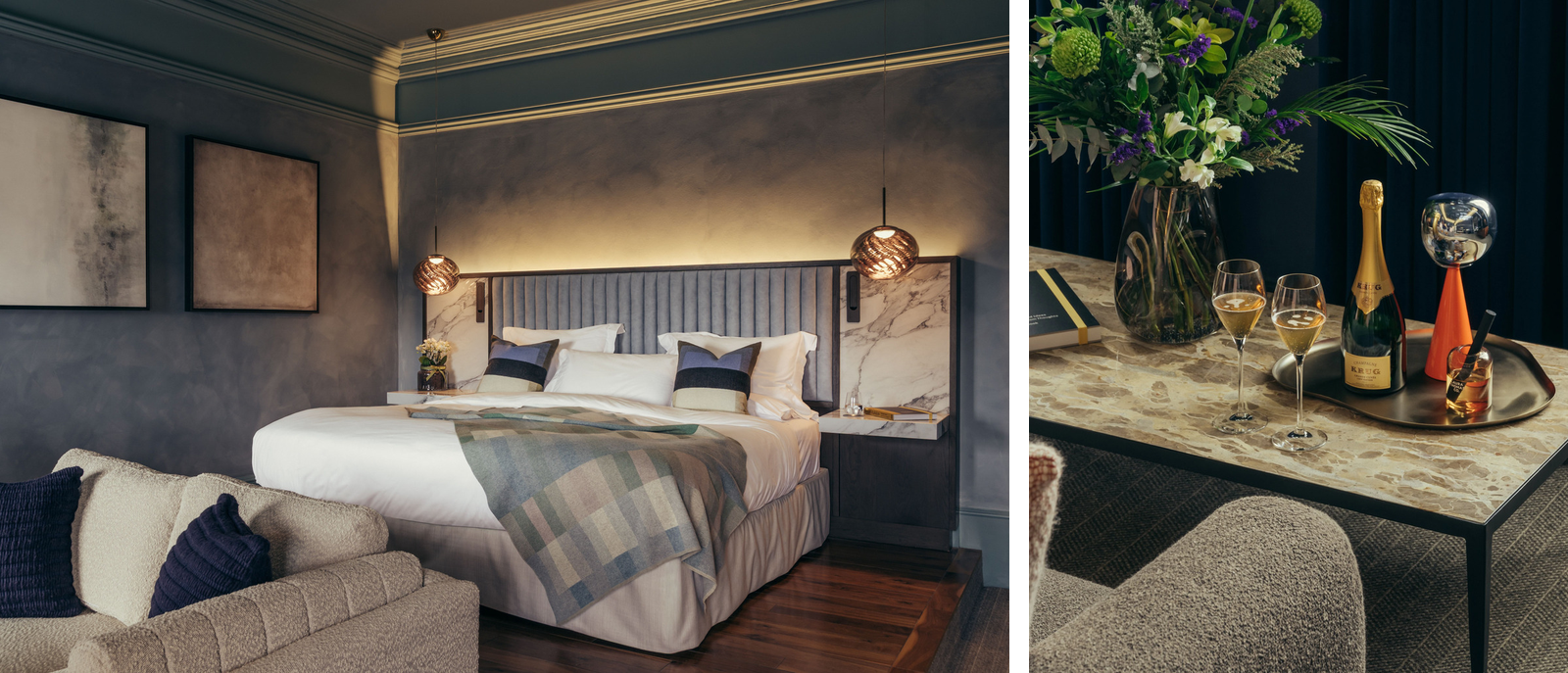
Lyla tells its story through Scottish seafood, cooked with French technique and a quiet Japanese accent in a Georgian townhouse on Royal Terrace. This year, the story gained a second act: you can sleep there.
Chef Stuart Ralston opened Lyla in 2023 and earned its first Michelin star in 2025. He has since taken over the four bedrooms upstairs (formerly the rooms of 21212).
“The fullest expression of Lyla.”
Stuart Ralston, on the rooms upstairs
Every detail is drawn from the restaurant. Glasgow studio Scarinish, which designed the dining room, designed the rooms too, with Domus tiling that echoes the drawing-room bar. Guests arrive to an aperitif with charcuterie, the minibar holds Lyla's own batched cocktails, Champagne and caviar, and breakfast comes to the room with a view over Royal Terrace.
Four rooms is about the smallest form a hospitality brand can take. It works because the evening never changes hands.
Brasserie Boulud, New York: three addresses become one flagship
For nearly two decades, Daniel Boulud held a corner across from Lincoln Center with three neighbors: Bar Boulud, Boulud Sud and Épicerie Boulud. This fall, the three became one. Brasserie Boulud is the Lyon-born chef's first true brasserie in New York, open from morning coffee and croissants until late.
Rockwell Group designed more than 10,000 square feet over two floors around a large oval bar, with private dining rooms, a speakeasy and a retail épicerie built into the plan. Old favorites return to the menu, from Boulud Sud's merguez to the DB Burger.
Nothing was lost. Each former experience now lives inside one legible place, and the guest heading to the opera has a single obvious answer. Consolidation reads as confidence when the brand comes out clearer.

Questions operators ask before expanding a restaurant brand
When is a restaurant ready to become a hospitality brand?
When guests already ask for more of it: more hours, more ways to visit, something to take home. Demand for the world around the table (the bar after dinner, the bread on the way out) is the clearest signal.
Should a successful restaurant open a second location or a new format?
A second location repeats the experience. A new format (a bar, a market, rooms upstairs) extends it. Choose by the ritual guests return for, and whether it survives in a new setting.
How do you expand a restaurant brand without diluting it?
Decide what guests are loyal to before deciding where the brand goes. Then carry those codes (service, materials, tone, a signature dish) into every new space, with branding and interior design developed together.
What is brand architecture for a restaurant group?
Brand architecture is how a group's names and identities relate to one another. Some groups extend one masterbrand into new categories (The Wolseley Hotels), some create a named sibling (Cantina Contramar, Humm), and some fold several concepts into one flagship (Brasserie Boulud).
What restaurant brand expansion asks of a brand
Read the five together and a pattern appears. None of these formats came from nowhere. Each grew from something guests were already doing: lingering at The Wolseley, wishing the night at Lyla would go on, crossing a city for a long lunch at Contramar, wanting Eleven Madison Park's world on a weeknight, needing one reliable table before the curtain at Lincoln Center.
The design follows the same logic. Branding, interior design and service have to carry the same codes into the new format, or the guest feels the seam. That is where a hospitality brand is made, and where it most often comes apart.
Sometimes the work leads to a hotel or a club. Sometimes to a market, a bakery or a bar. Sometimes to subtraction.
The goal is a brand world that is more valuable, more coherent and easier to enter.
Thinking about what your restaurant becomes next? We work across New York and San Francisco, and we would love to hear about it.