Neighborhood Bar vs. Destination Bar

How bar design and branding separate the local you return to from the landmark you cross town for.
Every good drinking city has two kinds of bars.
There is the one around the corner. You end up there without quite deciding to. The bartender starts your drink before you take off your coat; the regulars nod, and nobody is performing for anyone. And there is the other one: the bar you make a plan for, cross town for, and photograph before you have tasted a thing, because the room and the menu are the entire point.
One is a habit. The other is an event. And the distance between them is rarely about the cocktails. It comes down to branding, interior design, and positioning, the decisions that quietly determine whether a new bar becomes a neighborhood fixture or a destination on everyone's list.
For most of the last decade, the industry has poured its ambition into the second kind. Concept bars, cocktail lists with footnotes, hidden doors, rooms art-directed to within an inch of their lives, and a coveted place on someone's ranking of the world's fifty best. That ambition has produced some of the most inventive, beautiful spaces hospitality has ever built.
It has also made the first kind quietly harder to find, and more valuable than ever.
You can design a destination. A neighborhood has to be earned.
The destination bar
The destination bar is where design and branding do their most visible work. It runs on a strong idea, a distinctive identity, and a room engineered to be remembered and, increasingly, photographed. The drink list reads like a point of view. The lighting has been argued over. Everything, from the door handle to the glassware, tells you that you have arrived somewhere specific, somewhere worth the journey.
Its currency is novelty and occasion. You come for the experience, and the experience has to be good enough to justify the trip, the wait, and the premium. Done well, a destination bar can put a neighborhood on the map, make a hotel, or become the reason someone books a flight. This is design at full volume, and it works.
The catch is that novelty has a short shelf life. The night you discover a place is often the best it will ever be, and a destination has to keep re-earning the trip. It is a thrilling and exhausting way to run a bar.
The neighborhood bar
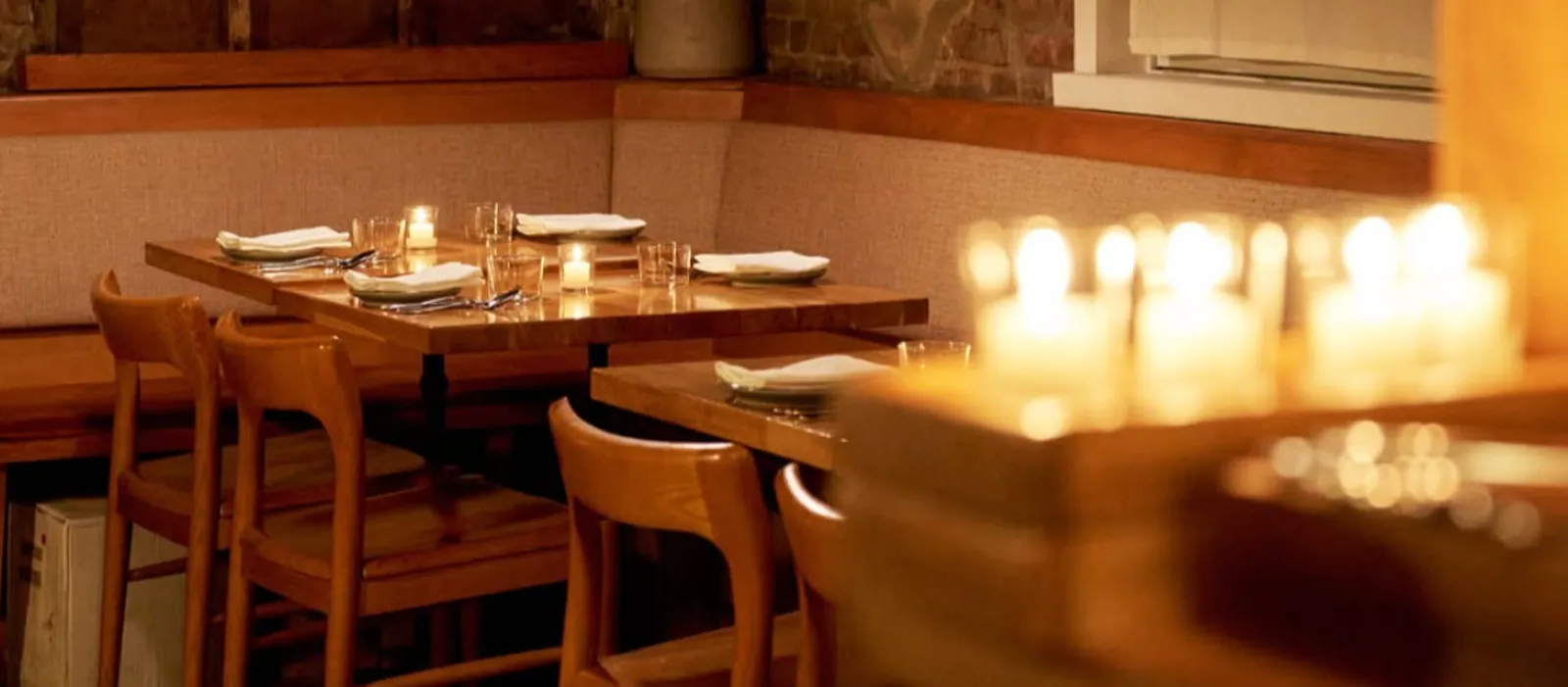
The neighborhood bar runs on the opposite premise: familiarity. You go because it is yours, and because it asks nothing of you. The bartender knows your order and your week. The room is comfortable rather than commanding, timeless rather than trend-led, built with good bones and good light so it can absorb a thousand ordinary evenings without ever looking tired.
Here is the part that humbles every designer. You can design the room, but you cannot design the regulars. The warmth of a neighborhood bar, the feeling of being known, the loyalty that brings someone back every Thursday for a decade, is earned slowly, through service and consistency and a point of view that never wavers. Design sets the stage. The community writes the play.
Which is why the neighborhood bar is, quietly, the harder thing to make. Spectacle can be bought. Belonging has to be built.
The best bars want to be both
The real mistake is confusing the two. A neighborhood spot that starts chasing destination buzz can lose the ease that made it beloved. A destination that never earns any regulars lives and dies on its next review.
The bars that endure refuse to choose. They pull like a destination and hold you like a local: distinctive enough to discover, warm enough to keep. They arrive with a concept and an identity strong enough to get you through the door the first time, and enough soul to make the tenth visit feel like coming home. That is the real brief, and it is far harder than either half alone.
Why it matters
A destination bar wins the night. A neighborhood bar wins the decade. The rarest, and the most valuable, manage to do both.
Which one a bar becomes is decided less by the cocktails than by branding, interior design, and positioning, working as one. Positioning sets the ambition, brand strategy gives it a name and a point of view, and the room makes it physical. Design those decisions together and a bar can photograph like a destination while still feeling like a local. Design them separately and guests feel the seams.
That is the bar worth building: the one you would cross town for, and the one you would come home to.
At ROY, we build hospitality brands where strategy, branding, and interiors work as one world, so a bar becomes unmistakably itself.
The bars
Destination bars
Sip & Guzzle
New York, 2024
The concept is two bars stacked at one Greenwich Village address. Upstairs, Sip is the polished cocktail room; downstairs, Guzzle is looser, later, and more playful, so the same front door offers a refined night or a rowdy one depending on which staircase you take. Built by a team of heavyweight bartenders, it was named the country's best new cocktail bar and climbed quickly onto the world's-best lists. It is a clean lesson in how one legible idea can carry a bar to destination status almost overnight.
Superbueno
New York, 2023
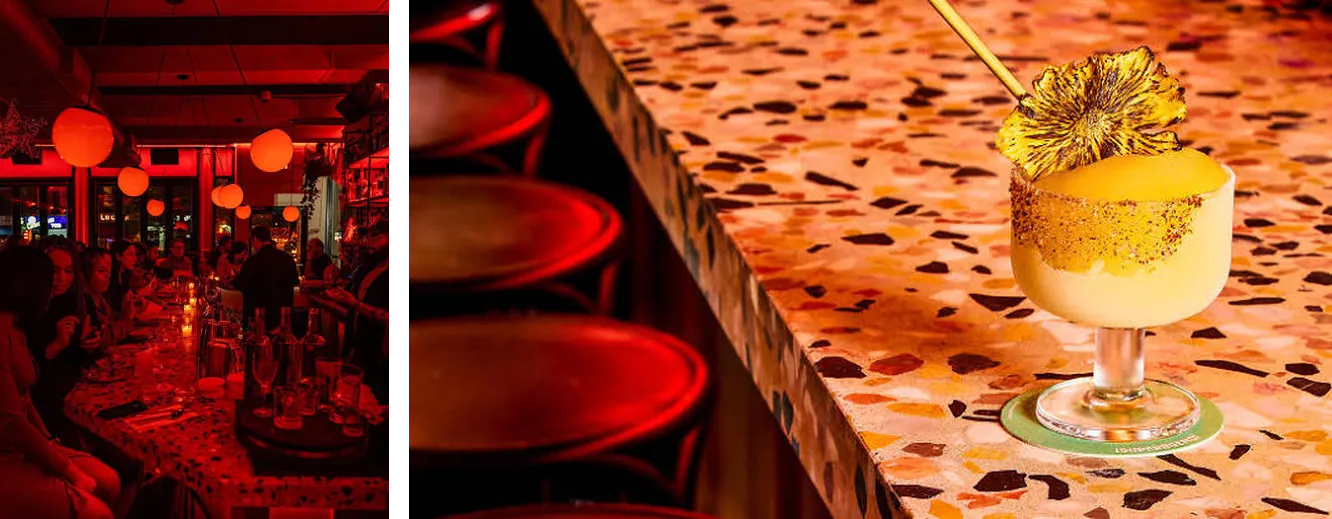
A Mexican-American cocktail bar on an East Village corner that turned a specific point of view into one of the highest-ranked bars in North America, number two two years running. The reference points are the corner bodega and the flavours of a Mexican-American childhood, from horchata to tejate, rebuilt as serious drinks. It is bright, loud, and reliably packed, proof that a sharp cultural concept can out-travel any amount of hidden-speakeasy mystique.
Tlecan
Mexico City, 2023
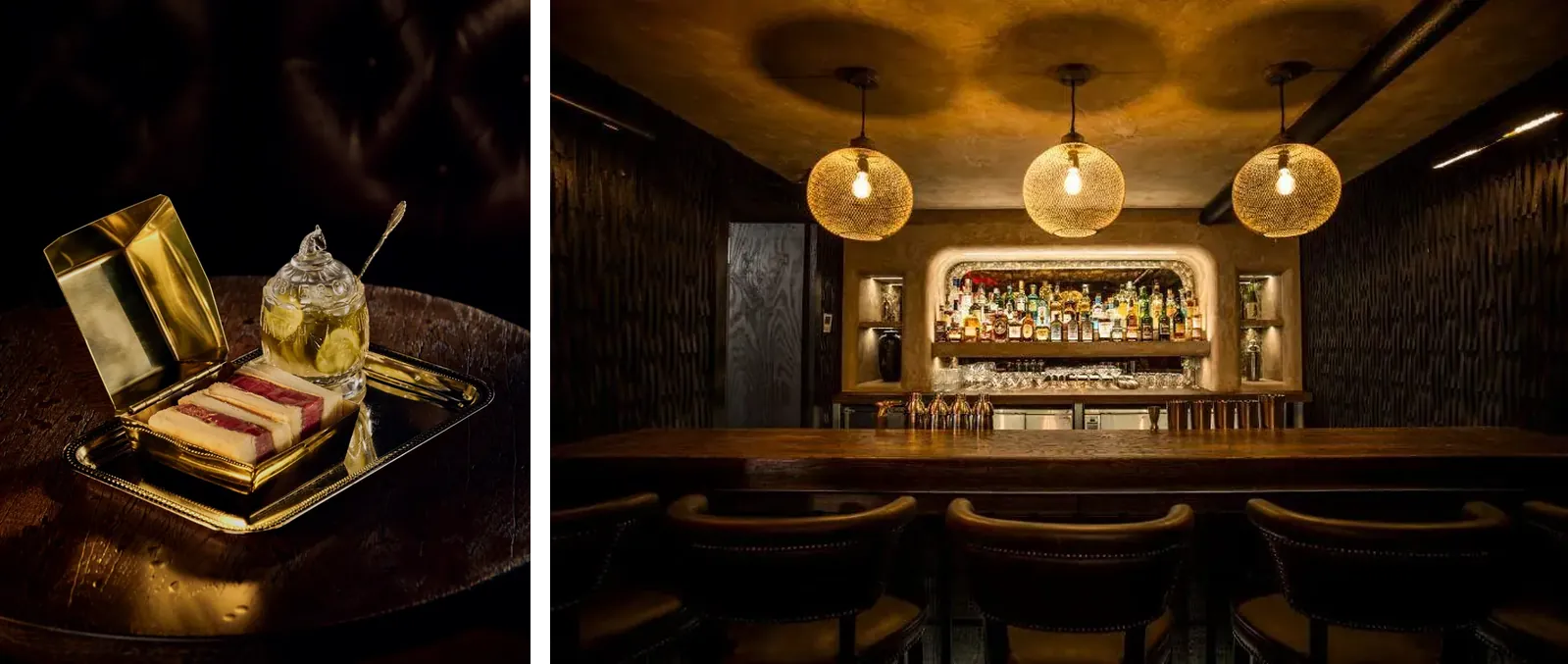
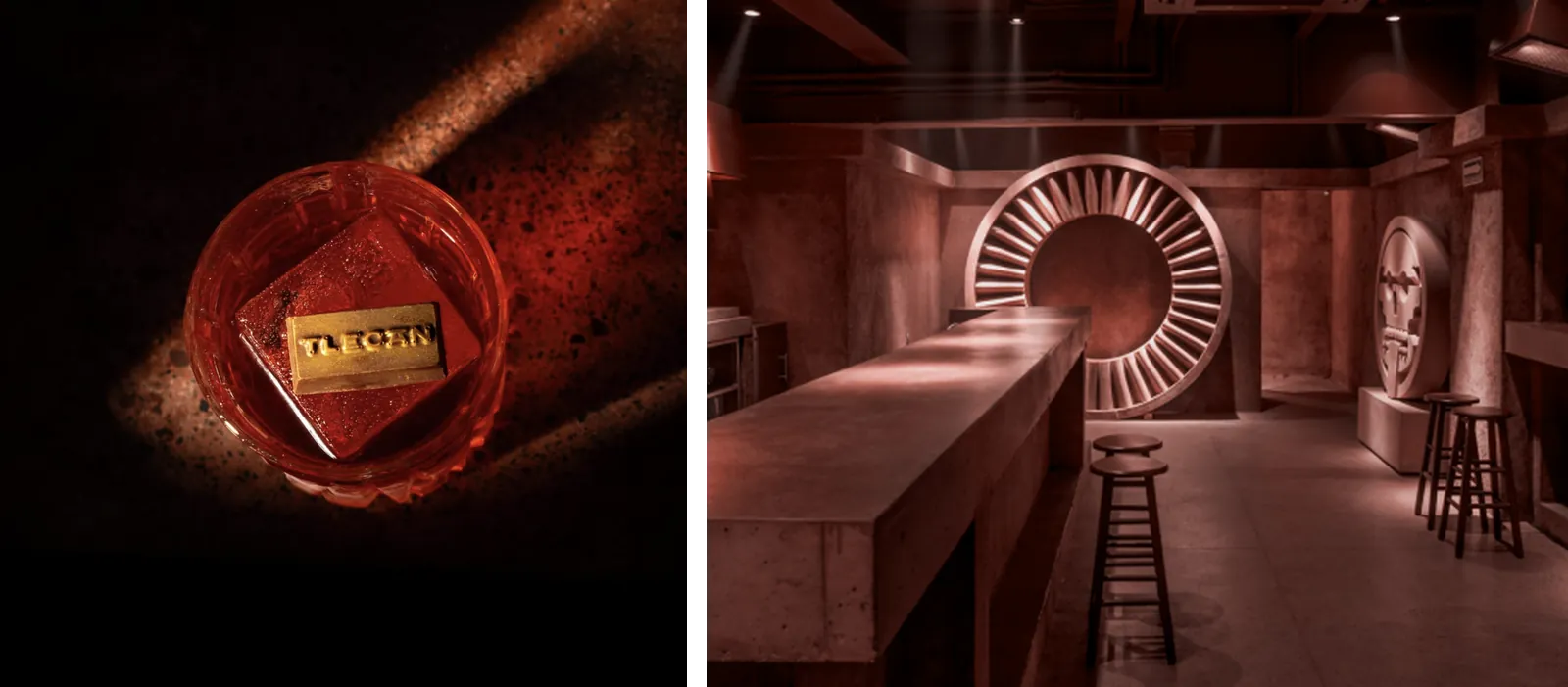
Mexico City may be the most exciting cocktail city in the world right now, and Tlecan is one of its clearest arguments. In Roma Norte, it builds everything around agave, taking guests past tequila and mezcal into pulque and lesser-known distillates, inside a room of carved stone that nods to the country's pre-Hispanic roots. It is a destination in the truest sense: educational, specific, and impossible to replicate, which is exactly why people seek it out.
Waltz Bar
London, 2025
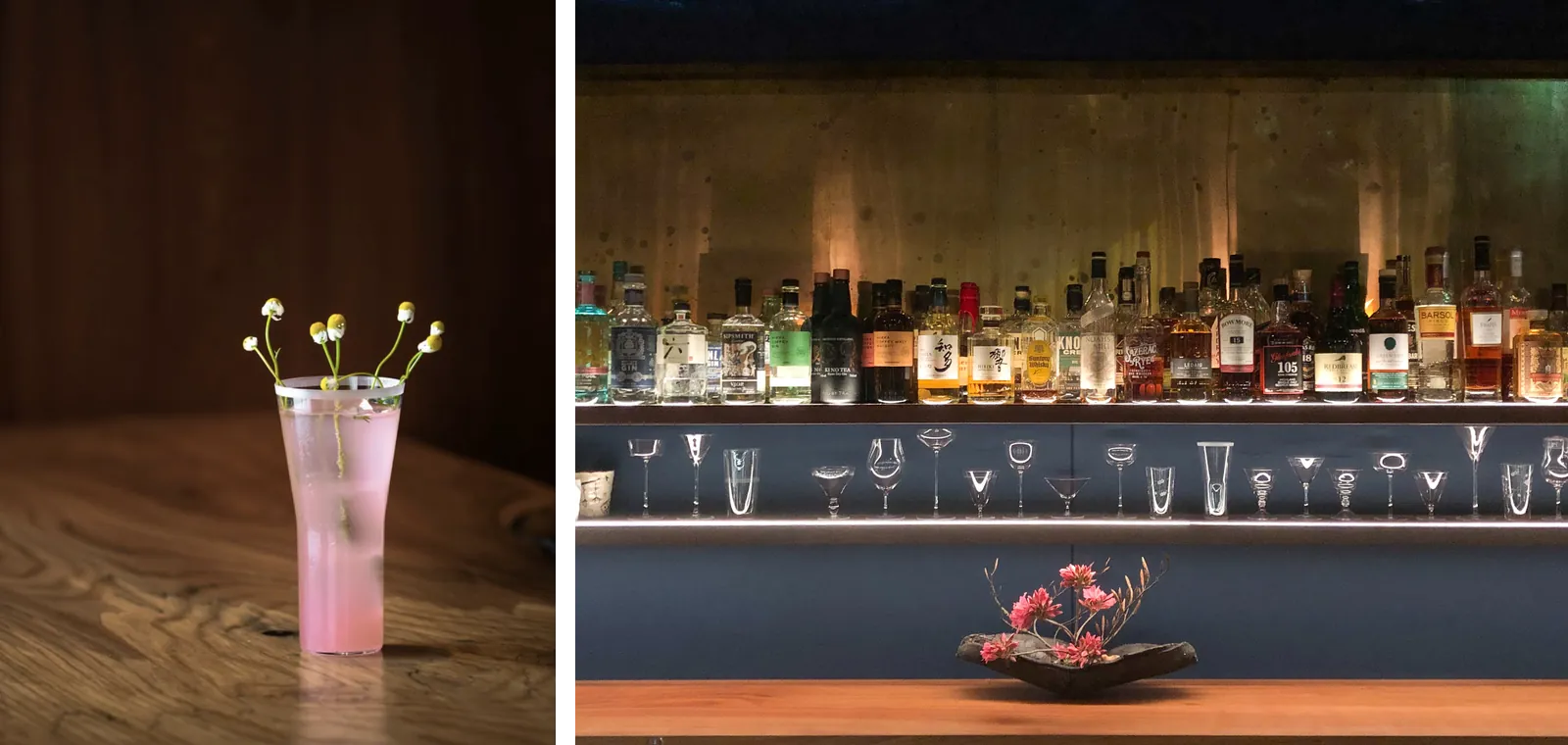
The freshest name here, open in Shoreditch only since spring 2025. Everything happens along a single eight-metre counter that seats twelve, so a night at Waltz is intimate by design. Founder Gento Torigata built the drinks around Japan's seventy-two micro-seasons, so the menu shifts constantly with ingredients like asparagus and peas, all set to Miles Davis and Chet Baker. It shows how a tightly focused idea, a counter, a country's calendar, a mood, can announce a new destination on day one.
Neighborhood bars
Lei
New York, 2025
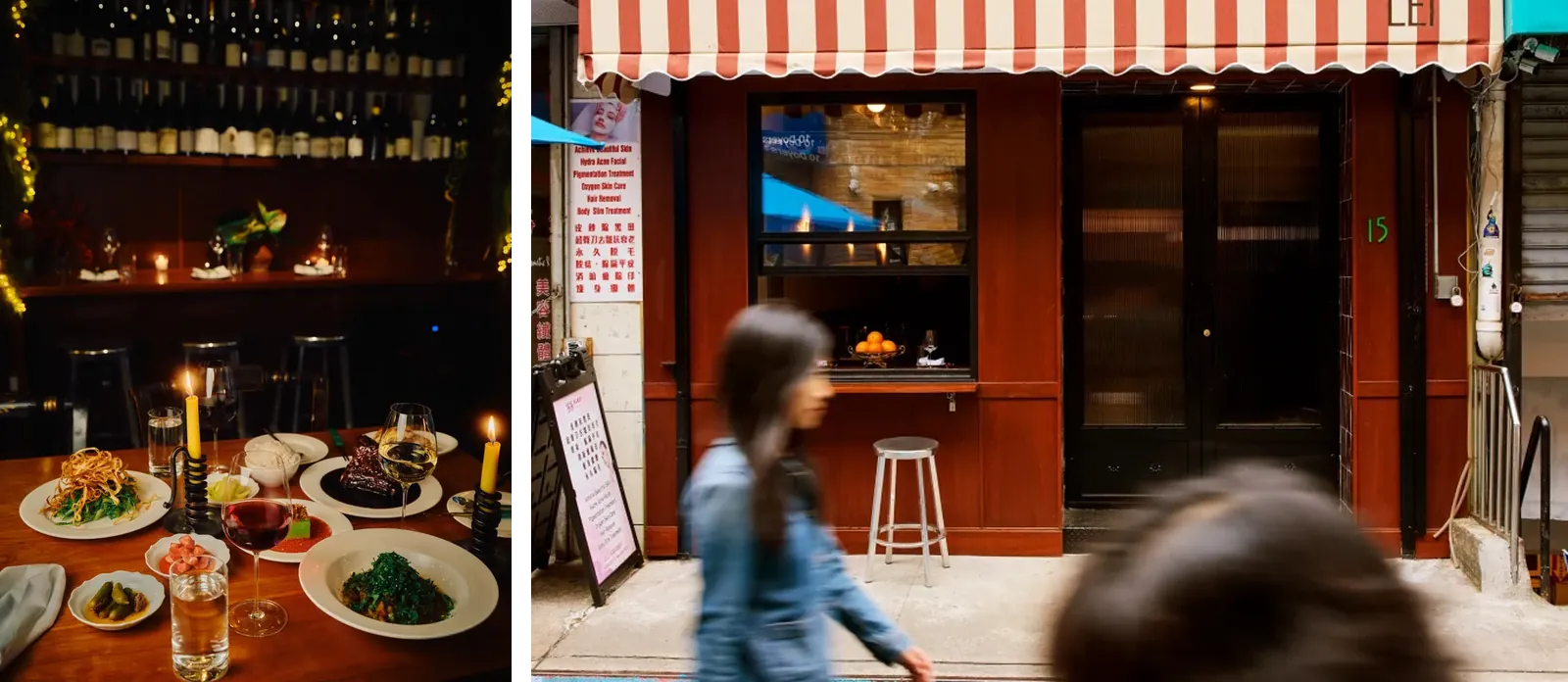
Opened on Doyers Street in Chinatown in June 2025 by Annie Shi, a co-owner of the acclaimed King, Lei is the rare wine bar New Yorkers seem to unanimously love. It pairs a destination-worthy list of wines by the glass and bottle with homestyle Chinese cooking (the chilled, scarlet celtuce alone is worth the trip) and knowledgeable, snobbery-free service. Reservations are hard to get, but the team always keeps room for walk-ins and works to make everyone feel welcome. That warmth, more than the wine list, is what makes it a proper local.
Frog Wine Bar
Brooklyn, 2024
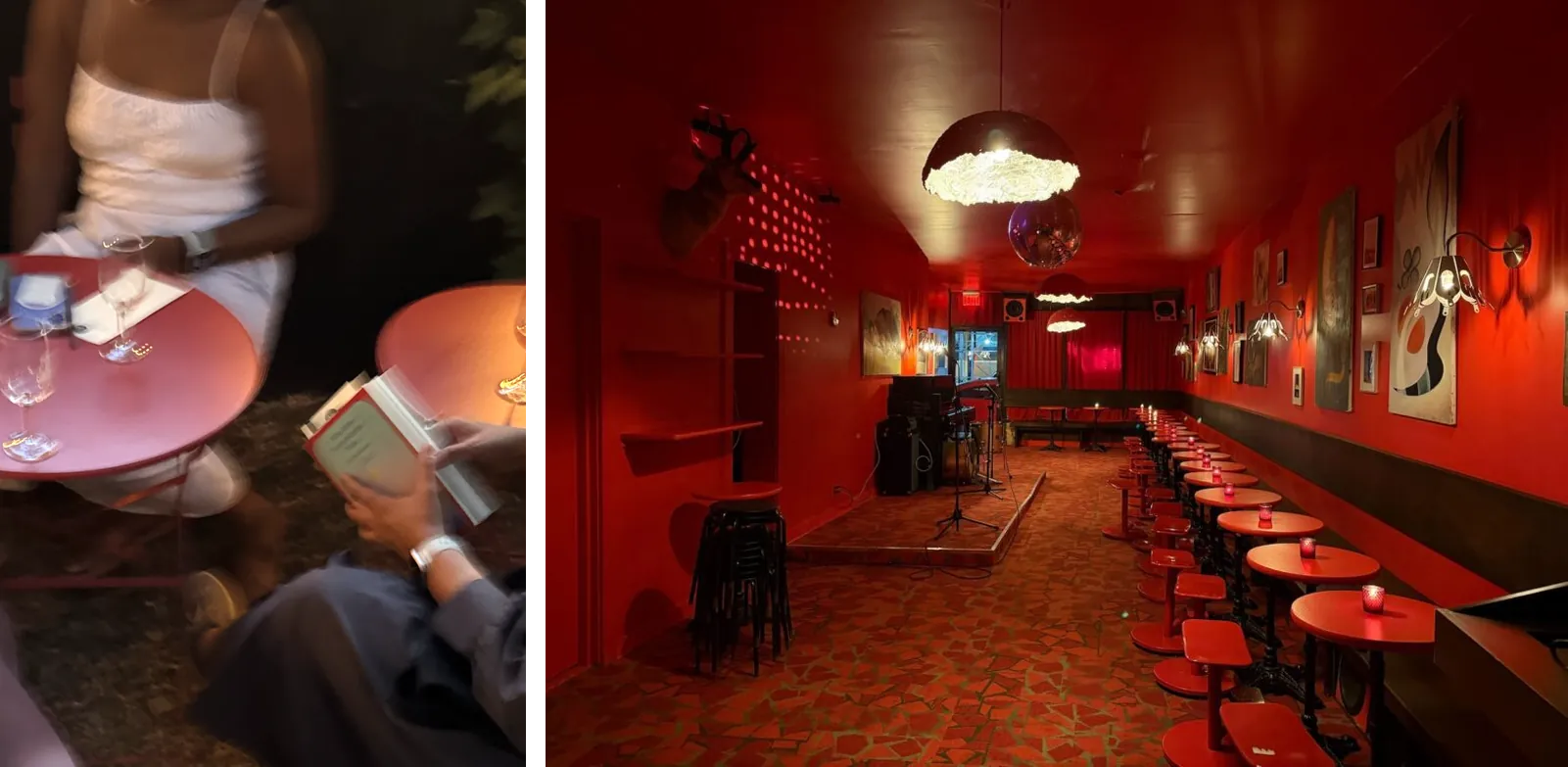
A natural-wine local in Clinton Hill that chooses ease over ceremony. There is a big garden, an indoor pool table, and a rotating list of orange and low-intervention bottles, and no kitchen, so Frog runs frequent food pop-ups instead. It is the kind of unpretentious corner spot you fold into your week without thinking, which is the whole point of a great neighborhood bar.
Place des Fêtes
Brooklyn, 2023
The second act from the team behind the Michelin-starred Oxalis, this cosy Clinton Hill wine bar refuses the usual wine-bar compromise on food. The kitchen cooks as well as the bar pours, both leaning Spanish, with simple seafood, thick grilled toast, and thoughtful vegetable plates alongside zippy natural wines from small producers. An open kitchen and the bar anchor a small room that fills up fast and hums, exactly the energy a neighborhood counts on.
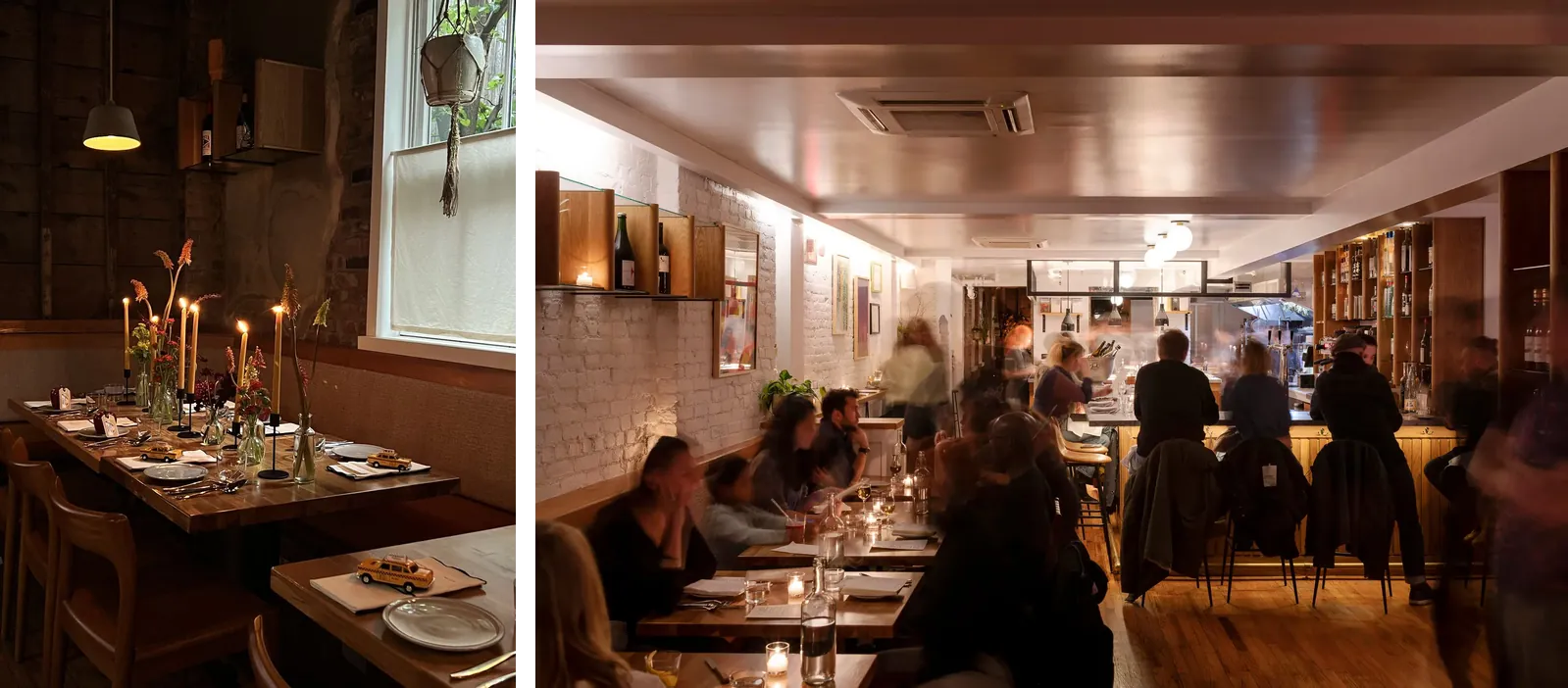
The best of both
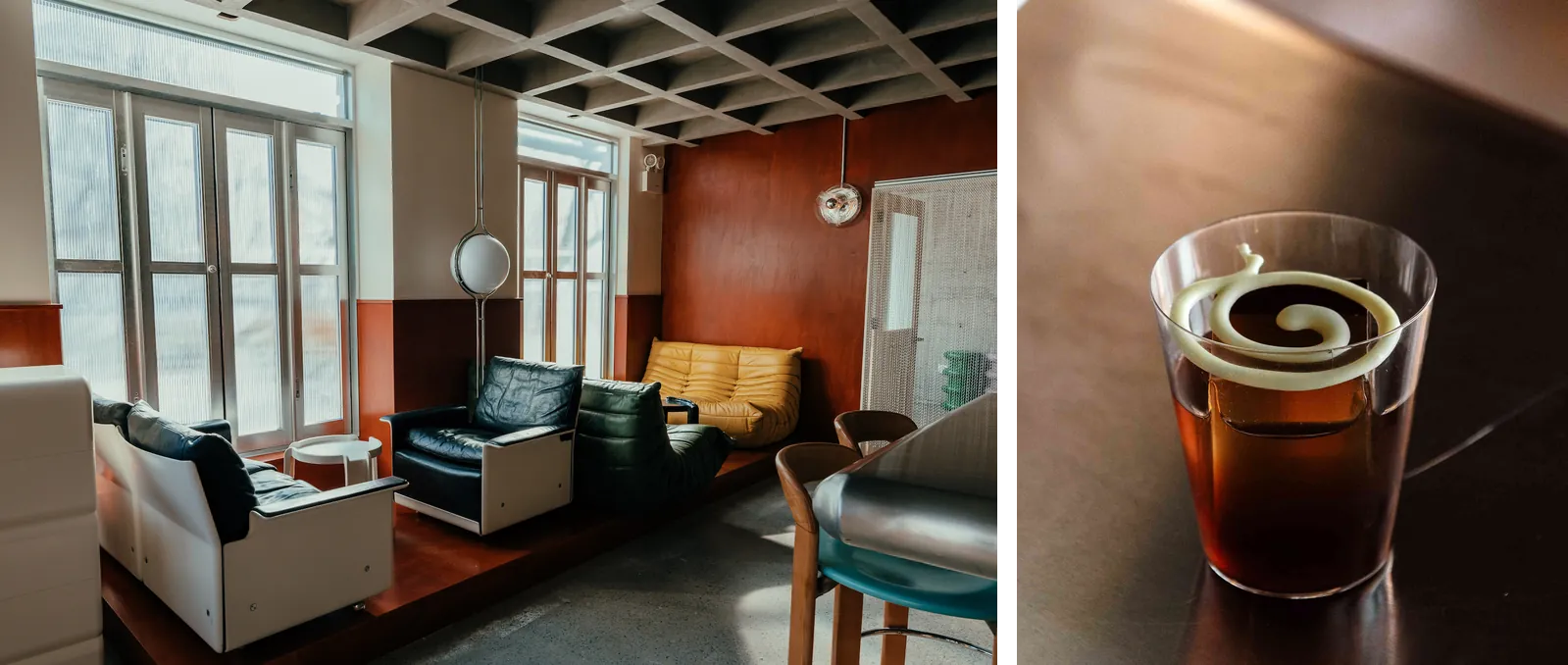
Schmuck
New York, 2025
The clearest living proof of the whole argument. Opened in early 2025 in the East Village by Moe Aljaff and Juliette Larrouy, the pair behind Barcelona's cult Two Schmucks, it reached number four on North America's 50 Best within its first year. And yet the entire concept is engineered to feel like a house party at a stylish friend's apartment: crimson walls, low couches, mostly walk-ins, and food-driven cocktails with jokes built in, split between a lounge-like Living Room and a communal Kitchen Table. It pulls like a destination and holds you like a local, which is the balance every bar here is chasing.