
Fashion Pulls Up a Chair

Why fashion keeps opening cafés, and stopping short of hotels.
For two years, a giant Monogram trunk wrapped a Belle Époque building on the Champs-Élysées, and the rumour behind it grew with every month of scaffolding. Louis Vuitton, the story went, was opening its first hotel.
In January, Bernard Arnault settled it in a sentence. Vuitton would not make a hotel. The house would concentrate rather than diversify. The building will open as a brand destination with shopping, exhibitions and a place to eat. Nobody will sleep there.
Meanwhile, the cafés keep opening. Zara has one. So do Lacoste and LOEWE, Vuitton pours coffee on three continents, and in SoHo an eyewear brand now runs a fifty-seat restaurant with a Neapolitan chef in the kitchen. Ralph Lauren proved the model years ago with The Polo Bar. What has changed is how ordinary it has become, and how small. The café is the right size.
Fashion's move into hospitality is real, and it has found its scale. For anyone working in restaurant branding, the interesting part is how small that scale turned out to be.
A café asks a brand to host someone for an hour: pour the coffee, set the table, hold the room together from breakfast to close. A hotel asks it to look after someone through the night. That is a separate discipline, with its own staff, its own economics, and very little patience for a beautiful idea that fails at 3am.
The café is where a fashion house can be precise. It is small enough to get every surface right, frequent enough to become a habit, and approachable enough to meet people who aren't buying the bag yet.
The strongest openings follow a pattern. They take one code the brand already owns and turn it into something you can taste or sit inside. They give it a local accent instead of a global template. And they hand the kitchen and the coffee to hospitality people.
Five rooms, five codes
Zacaffè
Madrid
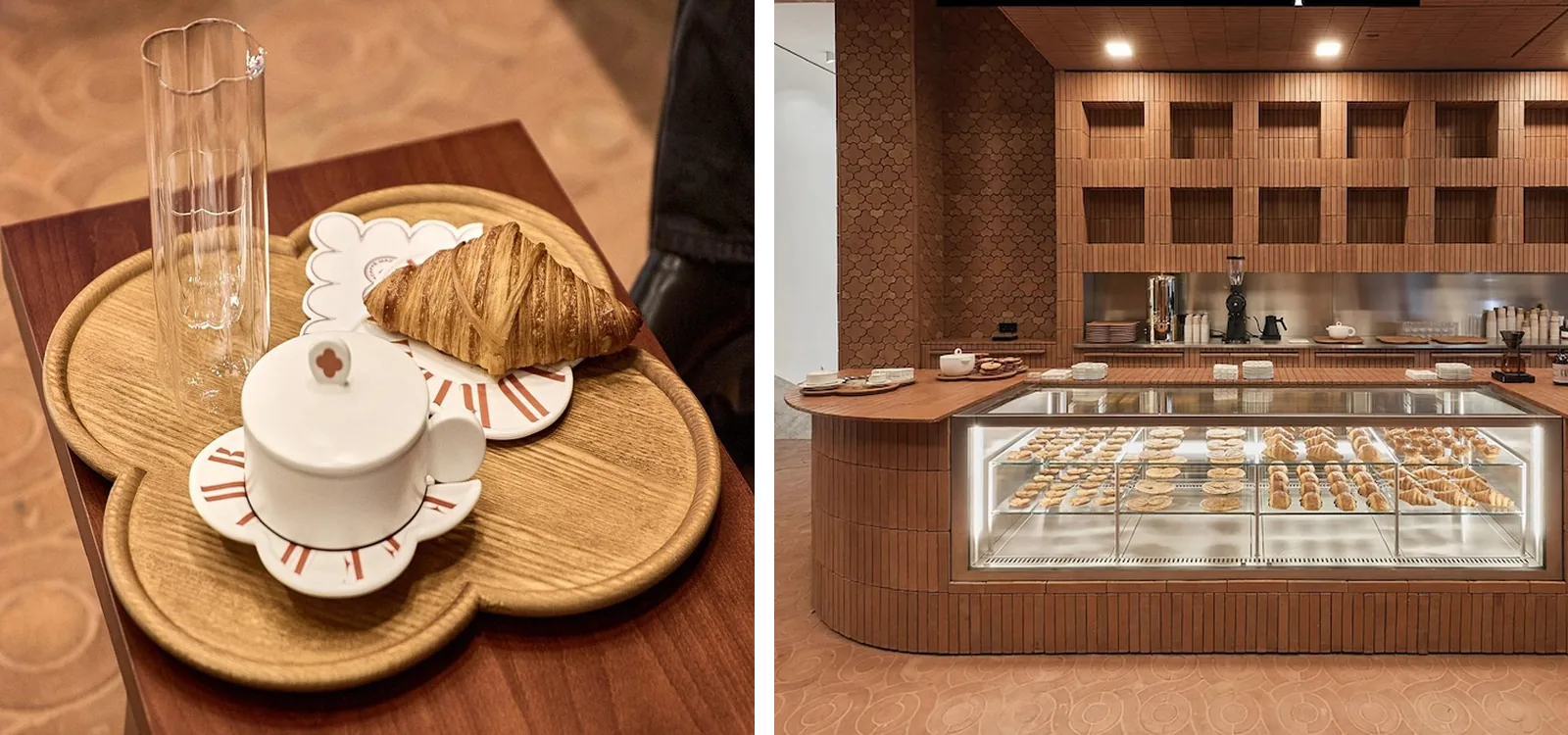
Zara's café sits inside its first menswear store, and the rule is that each one takes its cues from the city it lands in. Madrid's is covered almost surface to surface in handmade terracotta, a nod to the neo-Mudéjar brickwork a few streets away. The local accent is the whole concept, at the least expensive end of this movement.
Le Café Louis Vuitton
Shanghai
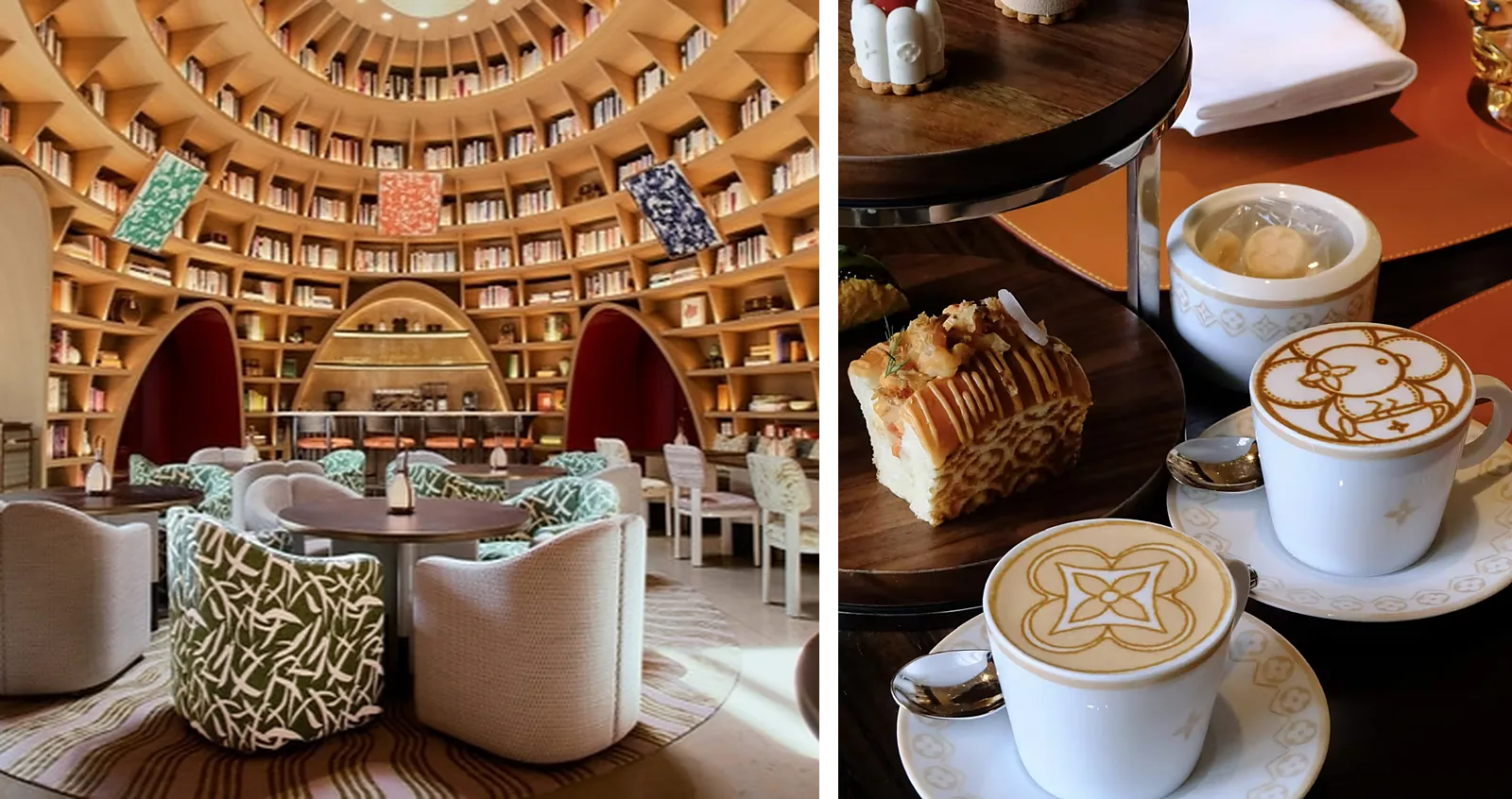
The building is shaped like a ship and sounds its horn on the hour, which is the kind of thing that could stop at spectacle. The menu keeps it honest: the Monogram arrives as jiaozi, and the Caesar salad is dressed with Shanghai yuja. One code, translated twice, once into pastry and once into a place.
LOEWE Perfumes
Seoul
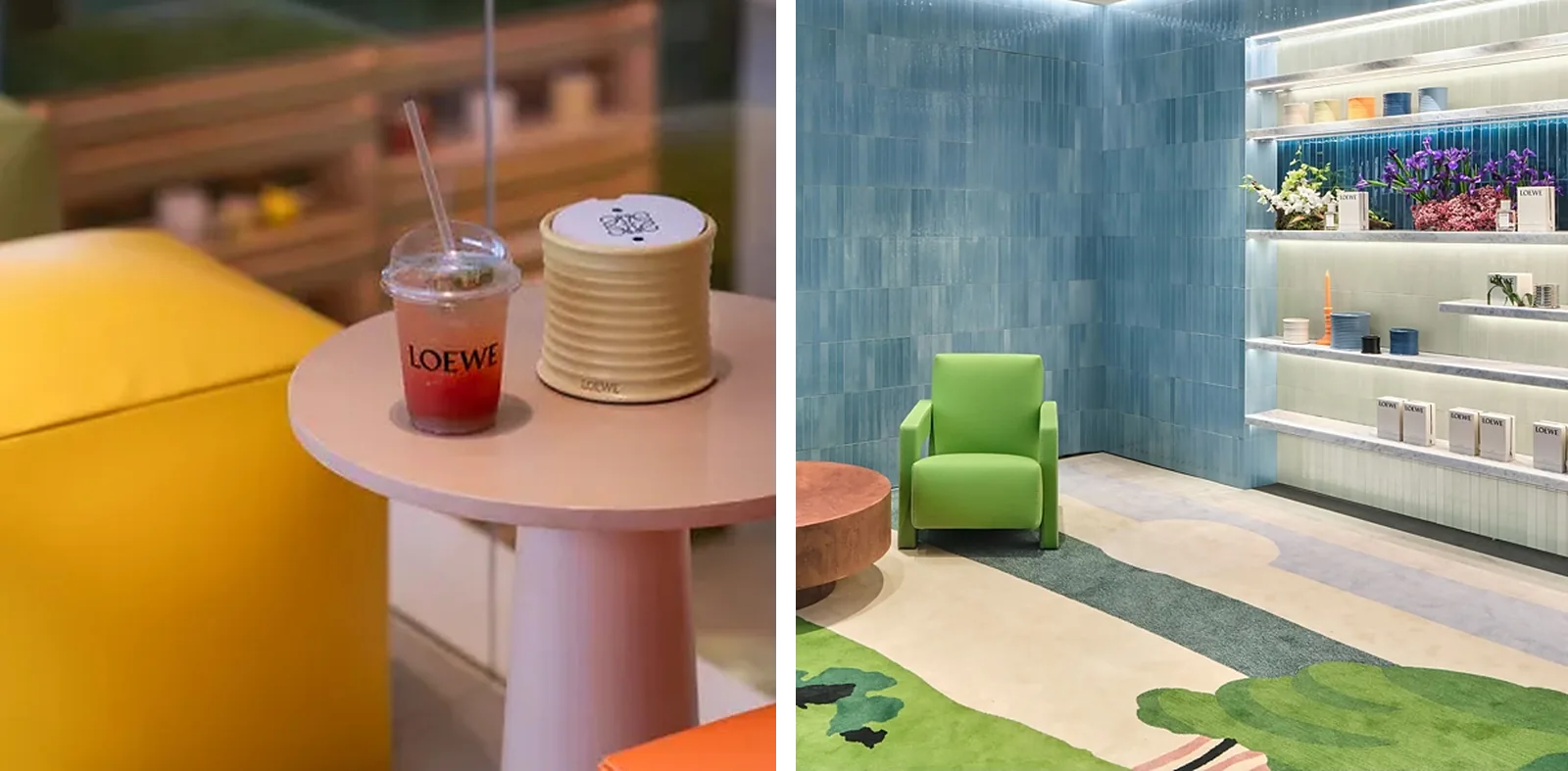
The first store LOEWE has given to fragrance alone, clad in handmade Spanish ceramic tiles, with a café upstairs. The drinks and desserts are built from the scents sold downstairs, so the brand's least physical product becomes the one you can taste.
Ray-Ban House
New York
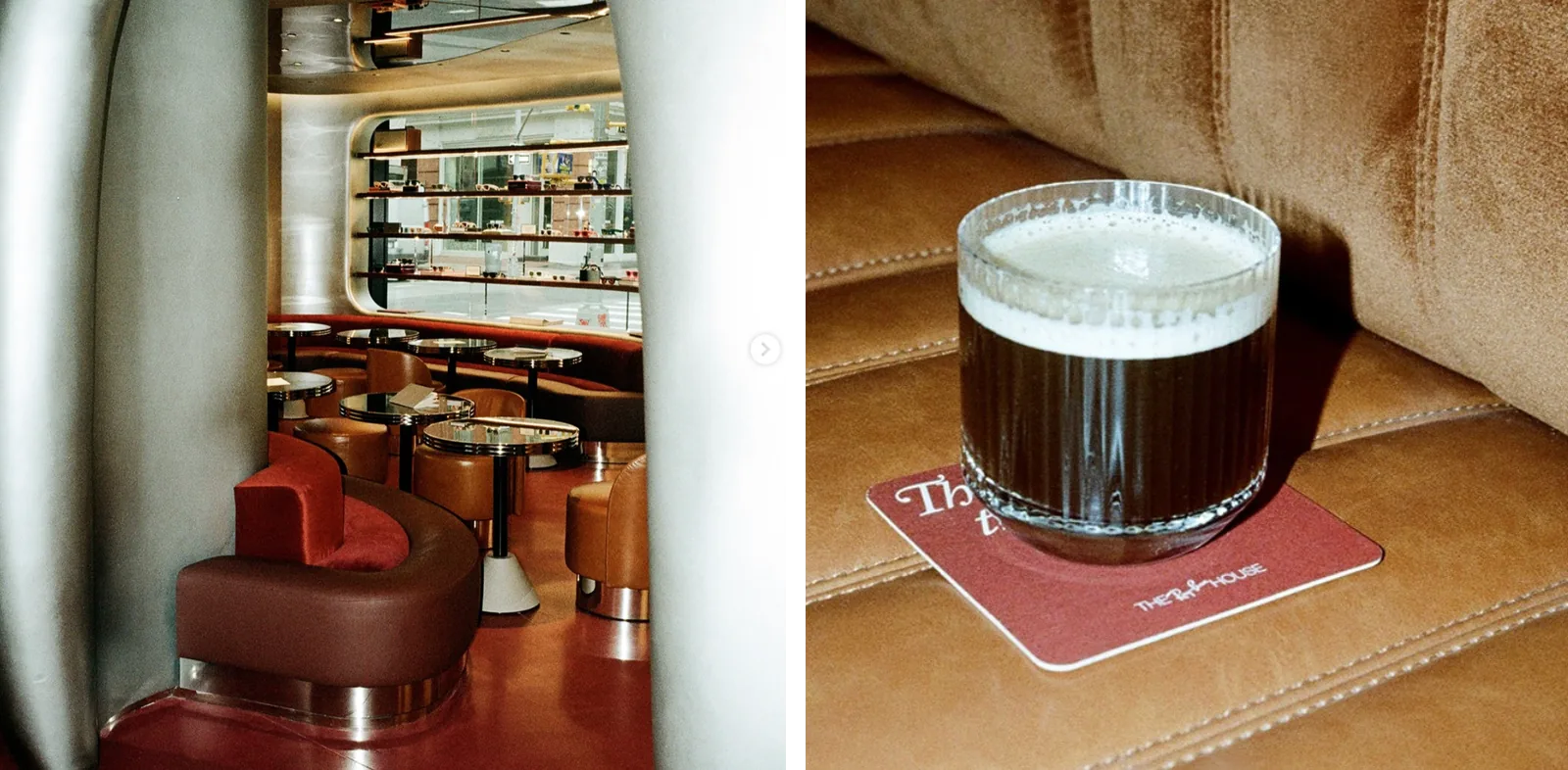
Fifty seats across a dining room and a patio on Prince Street, with Pasquale Cozzolino in the kitchen. An eyewear brand running a real restaurant is the clearest version of the pattern: the company holds the identity, and someone who cooks for a living holds the service.
Café Lacoste
Paris
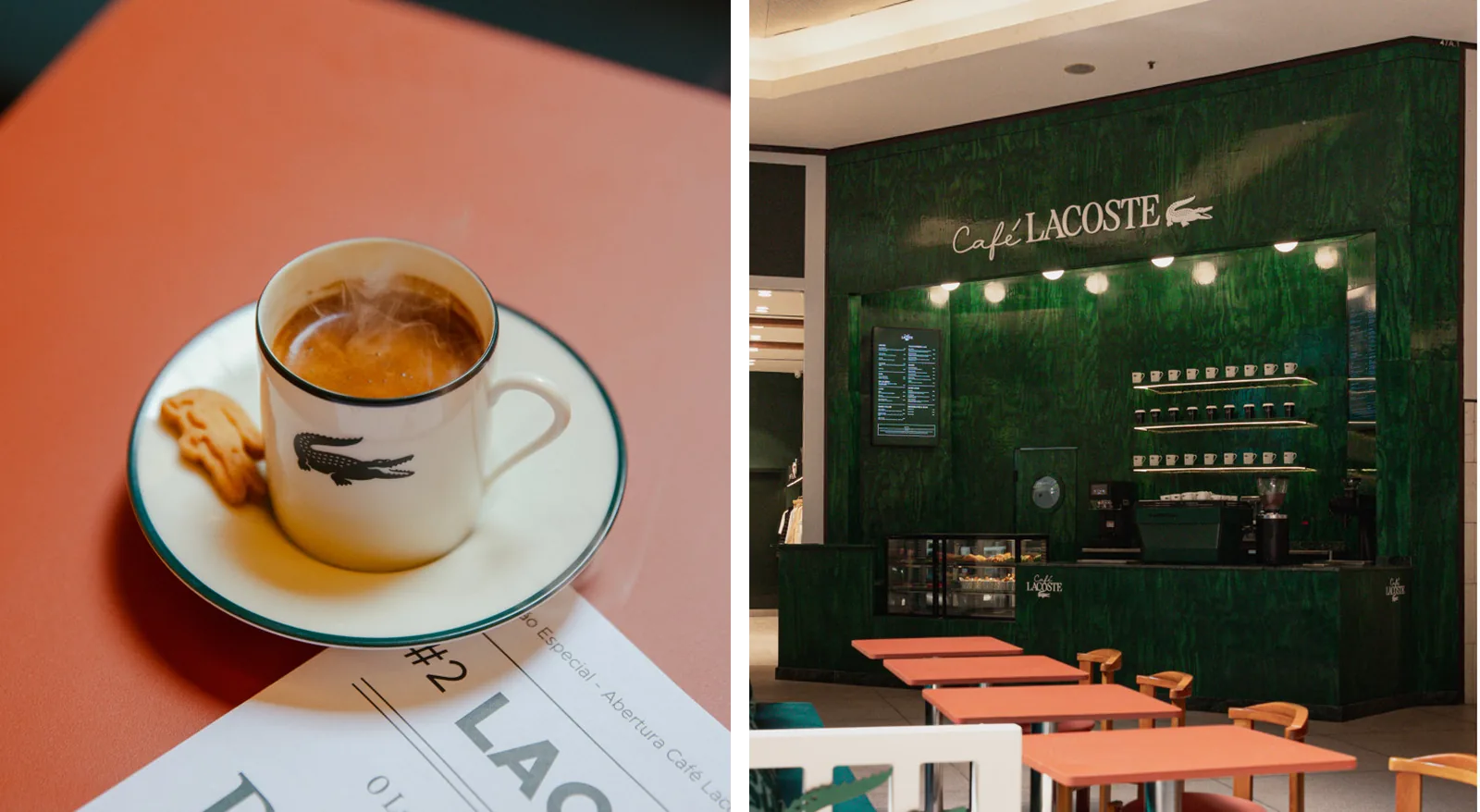
The polo shirt turns up as a cake, cut in the shape of the garment, alongside a coconut and matcha drink named after the crocodile. Lacoste tested the idea as a pop-up in Monaco before committing to a permanent room in Paris, and has since taken it to São Paulo, where the house blend is roasted in Brazil. That caution is what the café format allows and a hotel does not.
Four days on Wooster Street
New York is where the idea is moving fastest, and during Fashion Week it moved again. From 10 to 13 September, SKIMS took over a Wooster Street storefront with Community Goods, the Los Angeles café, for four days of exclusive merch and coffee. No lease, no kitchen, no second location to worry about. Hospitality used as a medium rather than a business line.
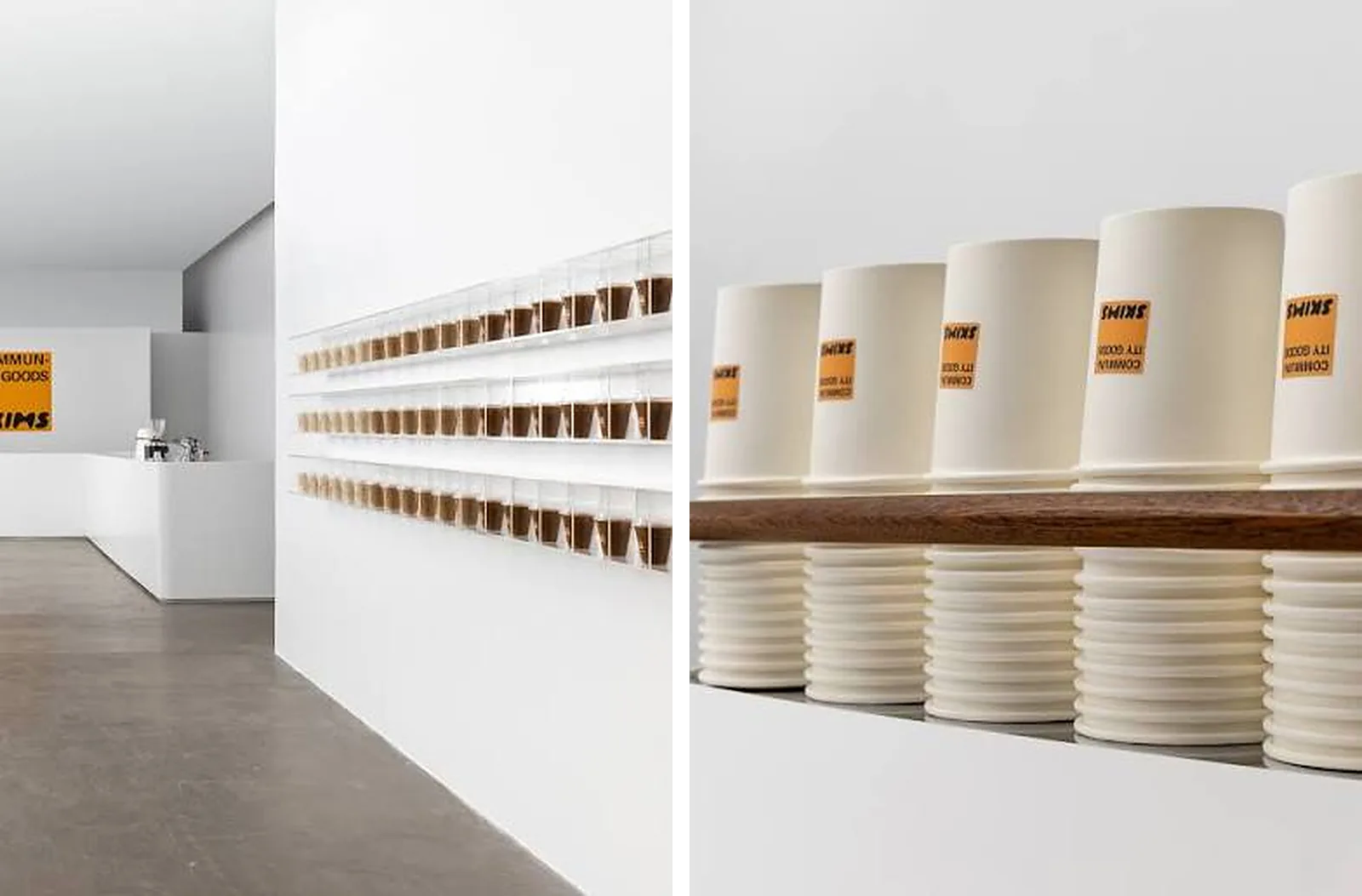
Read alongside Ray-Ban's restaurant eleven blocks away, it shows the range now available to a brand that wants to be somewhere as well as on something. Four days in a borrowed room at one end. A chef-led dining room inside a townhouse at the other.
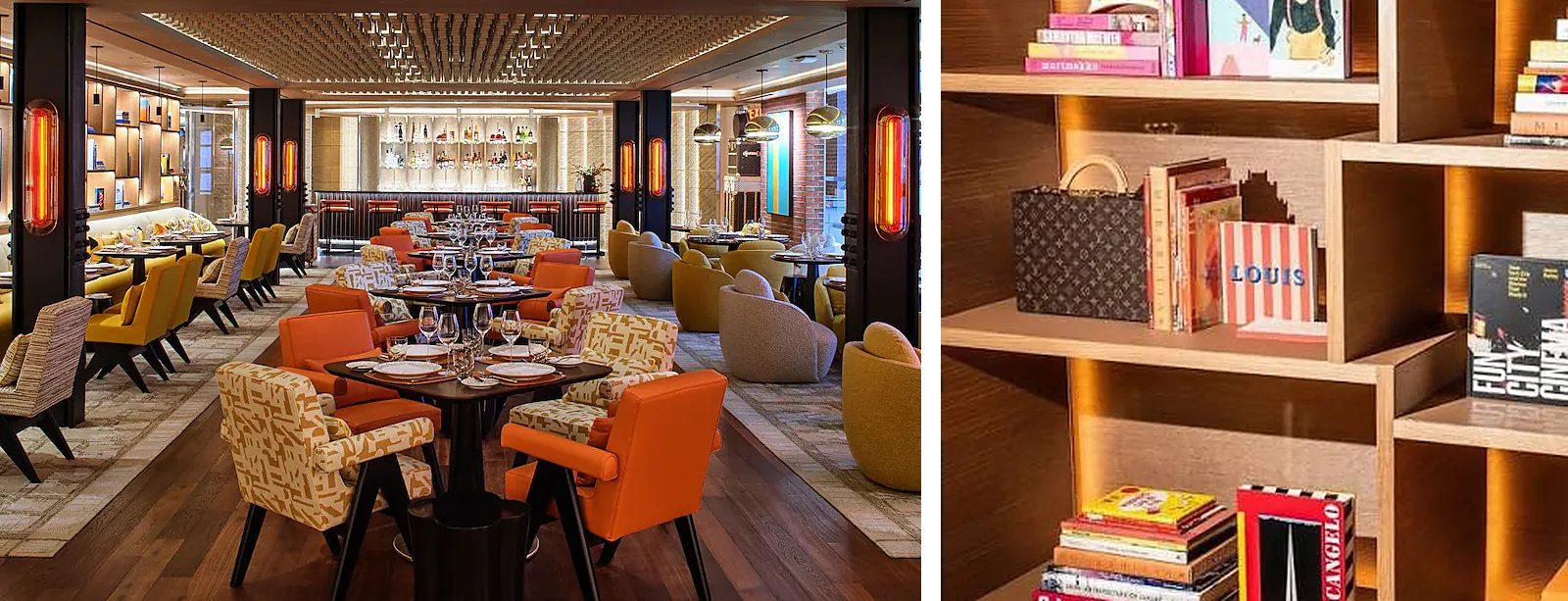
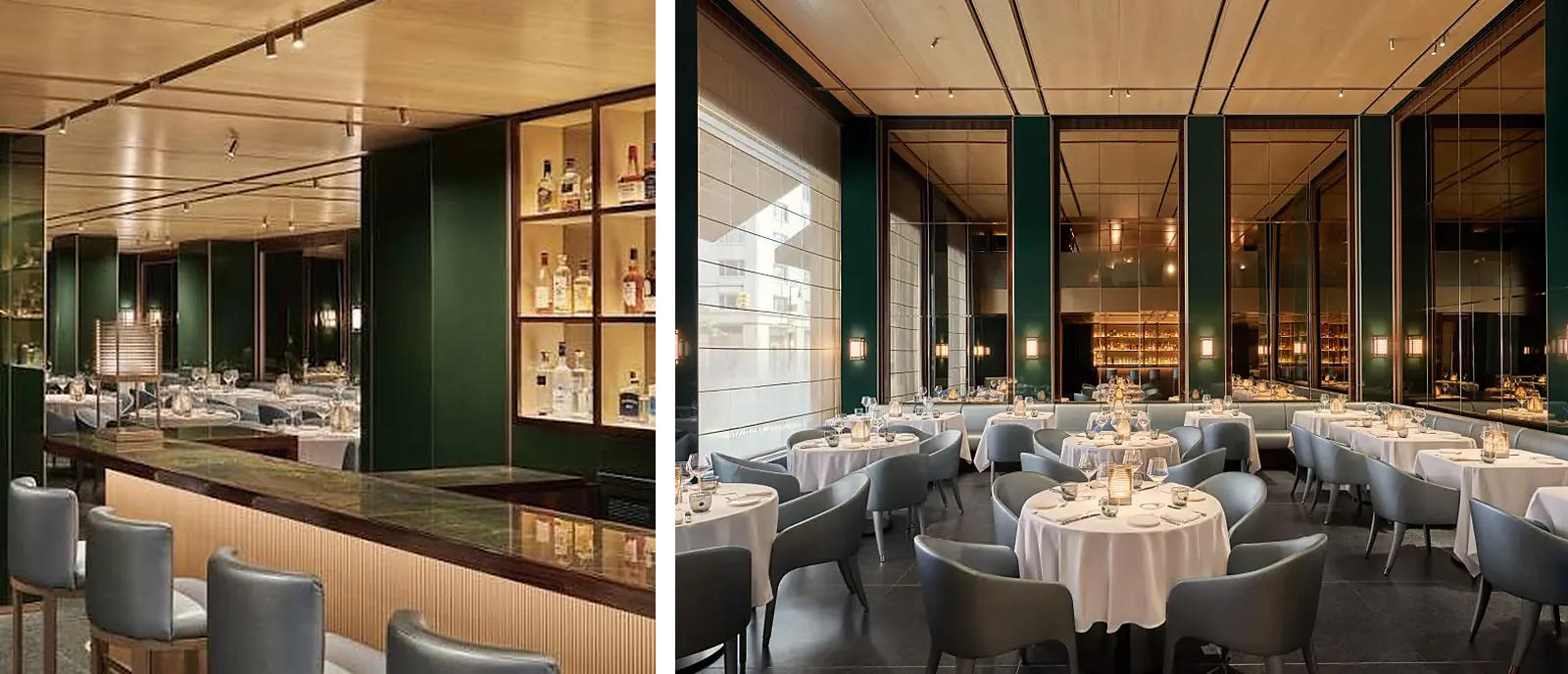
Midtown holds a third version. On the fourth floor of Vuitton's 57th Street building, a library café opened in November 2024 with Stephen Starr's restaurant group running it, and a Michelin-starred chef in the kitchen. Twelve blocks north, Armani's Madison Avenue building put a restaurant on the ground floor beneath the boutiques, Armani/Casa and the apartments, so the same idea carries from a jacket to a sofa to a plate. Different scales, same instinct, and in both cases people who run restaurants for a living are doing the running.
What restaurant branding can take from this
These rooms show identity under pressure. A polo shirt has to become a cake. A trunk becomes a dining room, and a fragrance becomes a dessert. Each asks a brand to work out what it actually stands for, in a form that gets eaten and judged by mid-afternoon.
That is also why the café suits them. The format forgives experiment. A menu turns with the season, a pastry can be retired, a room can be relit. A hotel is a promise made for decades.
For independent operators, in New York and San Francisco as much as anywhere else these brands land, there is a quieter lesson. Fashion brands now compete for the same morning coffee, often on the same streets, and they arrive with an identity worked into every surface, from the signage to the cup. The bar for how considered a small room feels has moved, and it has moved for restaurant branding and interior design together rather than one at a time. The response is the one these brands reached themselves: know the one thing you are, and let the room say it.
ROY is a hospitality branding and interior design studio working across restaurants, bars, cafés and hotels. If you are opening or repositioning a concept, start a conversation.